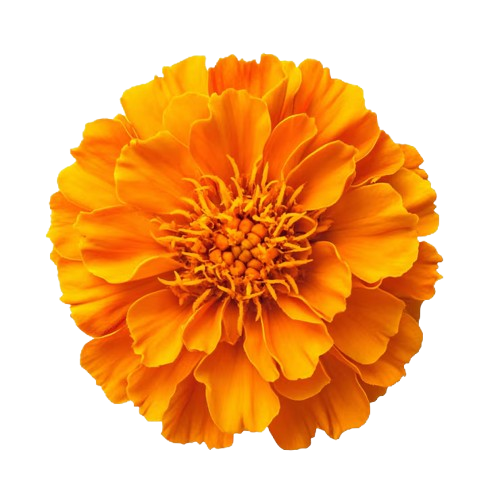
In most Maharashtrian households the tulsi in the angan is not treated as a plant. She is watered before anything else in the morning, a lamp is lit at her feet in the evening, and nobody in the house would think of stepping over her water. Once a year, she is married. And for a family that has been waiting through chaturmas to fix a wedding date, this is also the day the calendar quietly reopens.
What Tulsi Vivah is
Tulsi Vivah is the ceremonial marriage of the tulsi plant to Vishnu, performed in the form of Balkrishna or of the shaligram. It is conducted in homes, in temples, and in some places as a neighbourhood or village event, with the same shape as an ordinary wedding - a mandap of sorts, an antarpat, mangalashtaka, offerings and aarti - only at the scale of a courtyard.
It falls in the month of Kartik, in the bright fortnight, at the point where chaturmas comes to an end. The tradition holds that Vishnu wakes from his four-month rest on Prabodhini Ekadashi, also called Kartiki Ekadashi or Dev Uthani Ekadashi, and Tulsi Vivah is performed from that day onwards through to Kartik Purnima, the full moon known in Maharashtra as Tripurari Pournima. Within that window, families choose their own day. Some observe it on the Ekadashi itself, some on Dwadashi the following day, many on the Purnima, and a great many simply on the day the household can gather everybody.
A word on dates. Tulsi Vivah does not fall on a fixed date in the English calendar. It shifts every year with the lunar calendar, which is why the day that worked last year will not be the same day this year. For the current year's date, check your panchang or ask your family priest, who will also know which day within the window your household has traditionally kept. If what you actually need is a list of dated wedding muhurats rather than the festival day, our shubh vivah muhurat guide sets those out month by month.
The story behind it
Like most festivals of this age, Tulsi Vivah carries a story rather than an explanation, and the story is told in more than one way.
In the Puranic account most often repeated, there was a woman named Vrinda whose devotion to her husband was so complete that it made him unassailable. No one could defeat him while her devotion held. In the narrative, Vishnu took a form she recognised as her husband's, and her devotion was broken, and with it her husband's protection. When she understood what had happened, the tradition tells, she was overcome with grief. In the account, Vishnu honoured what she had been - and she became the tulsi, with the promise that he would be worshipped only alongside her, in the form of the shaligram, and that their marriage would be re-enacted every year in Kartik.
Versions of this differ. Different Puranas tell it with different names, different details and different emphases, and regional retellings across Maharashtra and elsewhere add their own. Some accounts identify Vrinda and Tulsi as the same person; some treat Tulsi as a distinct figure associated with Lakshmi. Some tell the story as one of loss, others as one of a devotion so unbreakable that it was given a permanent place in worship. None of these versions needs to be argued down in favour of another. What every version agrees on is the ending - the tulsi is inseparable from Vishnu, and once a year that bond is honoured with a wedding.
Why it matters in Maharashtra specifically
In a Maharashtrian home the tulsi is not a seasonal decoration. The tulsi vrindavan - the built platform in the angan or on the balcony, often plastered and painted, sometimes with a small niche for a lamp - is a fixture, and in many families it is the oldest thing in the house. It is watered daily. A diva is lit at it in the evening. A woman of the house does a pradakshina around it. When somebody leaves for something important, they pause there first. Even in a Mumbai or Pune flat with no angan at all, families keep a tulsi in a pot on the gallery and keep the same routine.
So when the day arrives to marry her, it does not feel abstract. The household is arranging a wedding for someone who lives in the house.
There is also a genuine seasonal turn underneath it. Kartik is when the monsoon has finished, the fields have been worked, the air changes, and the year opens out again. Chaturmas, the four months of restraint during which most families avoid weddings, housewarming ceremonies and other large auspicious functions, ends here. Tulsi Vivah sits exactly at that hinge. It is the first wedding of the season, in a very literal sense, and every wedding that follows in the household calendar comes after it.
How the ritual is commonly performed at home
What follows is the shape the ceremony commonly takes in Maharashtrian homes. It is a description, not a prescription. Households differ on the day, the order, the items and the level of elaboration, and every one of those variations is somebody's correct family practice. If your family has its own way of doing this, that is the version to follow.
- Clean and decorate the tulsi vrindavan. The vrindavan is washed down in the days before. Many families give it a fresh coat of paint or a lime wash, and decorate it with rangoli, flowers, mango leaves and small lamps. Some draw the rangoli only on the day itself. In flats, the pot and the space around it are cleaned and arranged the same way.
- Dress the tulsi as a bride. A small saree or a length of cloth is draped around the plant or the vrindavan, along with bangles, a small mangalsutra in some homes, flowers, and haldi-kunku. Some families keep this very simple, others dress the vrindavan quite elaborately. Both are common.
- Place the Balkrishna murti or shaligram beside her. A small murti of Balkrishna, or a shaligram where the household has one, is bathed, dressed and placed next to the tulsi as the groom. Families who have neither commonly use a photograph or an image of Vishnu, and the ceremony proceeds without difficulty.
- Perform the ceremony as a wedding. An antarpat, the cloth held between bride and groom, is held between the tulsi and the murti, and mangalashtaka are recited - sometimes the full traditional verses, sometimes a shortened form, sometimes with the household's own additions. The family stands around as at any wedding, akshata are thrown at the end of the verses, and the antarpat is lowered. Where a priest is called, he leads this; in a very large number of homes an elder of the family does.
- Offer the traditional items and the naivedya. Sugarcane stalks, an amla branch, tamarind and seasonal produce are offered and arranged around the vrindavan, along with a naivedya of whatever the household prepares for the occasion. The specific items vary by family and by what the local market has that week.
- Conclude with aarti and distribute prasad. The ceremony ends with aarti, and prasad is distributed to everybody present. In many neighbourhoods this is the part that matters socially - the whole building or the whole lane comes down, and it turns into a gathering.
Some families do the whole thing in twenty minutes before dinner. Others make an evening of it, invite the extended family, and treat it as a proper function. Neither is more correct.
What is traditionally offered and why
The offerings at Tulsi Vivah are, more than anything, the offerings of the season. Kartik is when this particular produce comes in, and the puja plate reflects what the ground has just given.
- Sugarcane. Stalks are commonly tied together over the vrindavan to make a canopy, or stood at its corners like the poles of a mandap. Sugarcane is at its best in Maharashtra at exactly this time of year.
- Amla. A branch of amla, often with the fruit still attached, is placed at the vrindavan. The amla is closely associated with Kartik in general, and Kartik Purnima is marked in some households with observances involving the amla tree.
- Tamarind. Fresh tamarind is offered alongside the amla, and chinch-awla appears together on the offering plate in many homes.
- Seasonal produce and sweets. Bor, sweet potato, groundnuts, and whatever else has just come into season are offered, along with a naivedya that differs entirely by household.
You will hear a range of symbolic explanations attached to each of these, and they differ from telling to telling. The honest version is simpler: these are the fruits of the Kartik season, offered at a Kartik festival, in a farming state where the festival calendar and the harvest calendar have never been separate things. If your family attaches a particular meaning to a particular offering, that meaning is real for your family, and worth keeping.
Tulsi Vivah as the opening of lagnasarai
Here is the part that matters practically for anyone currently looking for a match.
Through chaturmas, roughly from Ashadhi Ekadashi to Prabodhini Ekadashi, most Hindu families in Maharashtra do not conduct weddings. Muhurats are scarce or absent, halls are quiet, and families searching for a match often find the whole process slows down - proposals are discussed but nothing is finalised, and elders say quite reasonably that there is no point fixing anything until the season turns.
Tulsi Vivah marks that turn. From this point the auspicious period reopens, muhurats become available again, and the wedding season - lagnasarai - begins in earnest and runs through the cooler months. In practice this means several things happen at once. Halls and mangal karyalayas start filling up for the coming months. Caterers, bands and photographers begin taking bookings. Families that had a match more or less settled during the monsoon move to fix a date. And families that have been waiting to start looking, start looking. For how the year's rhythm works across the full calendar, see our guide to the wedding seasons of Maharashtra.
If you are searching, this is the busiest and most productive stretch of the year for you, and it is worth entering it prepared rather than reacting to it.
What a searching family should do with this moment
None of this needs to be turned into pressure. But the weeks around Tulsi Vivah are genuinely when things move, for one very ordinary reason: this is when families see each other. There are functions to attend, weddings in the extended family, temple visits, and relatives in the house. Matches get discussed in exactly these gatherings, and they always have.
- Have the biodata ready and current. Not being drafted the night an aunt asks for it. Check that the photograph is recent, the job and location are up to date, and the family details are correct. If yours needs rebuilding from scratch, our free biodata creator produces a clean print-ready version in Marathi or English, and our post on Marathi biodata formats and templates shows what a well-arranged one looks like.
- Expect relatives to raise proposals. Somebody will mention a family, or a boy in Nashik, or their neighbour's daughter. This is how a very large share of matches still begin. Decide in advance how you want to respond to these so that you are neither dismissive nor over-committing on the spot.
- Know your own answer to what you are looking for. The question comes up constantly at this time of year, and a vague answer produces vague suggestions. Two or three clear points - the city, the work, the family arrangement, whatever genuinely matters to you - make every conversation more useful.
- Talk to the elders in your house before the gatherings, not during them. If there are things your family will and will not consider, it is far better for everyone to know that before a proposal is raised across a room full of relatives.
- Keep an eye on the muhurat calendar early. If a match does move quickly, the good dates in the coming months get taken first, and halls go earliest of all.
A short note on Tulsi Vivah performed for a purpose
Some families perform Tulsi Vivah as a vrat, or with a particular intention in mind. One of the intentions families commonly name is a daughter's or a son's marriage - the household performs the ceremony with that sankalp, sometimes taking on the observance for a set number of years, sometimes performing it in a fuller form than usual.
This is a real and widely observed practice, and it is mentioned here because families do it, not as a recommendation and not with any claim about what follows from it. Households that observe it in this way generally know their own form of it, and where they do not, the family priest is the person to ask. Families who perform Tulsi Vivah simply as the annual festival, with no particular intention attached, are doing nothing less.
Frequently asked questions
When is Tulsi Vivah this year? It shifts every year, because it follows the lunar calendar rather than the English one. It falls in Kartik, from Prabodhini Ekadashi through to Kartik Purnima, and families choose a day within that window. Check the current year's panchang or ask your family priest, who will also know which day your household usually keeps.
Who can perform Tulsi Vivah? Any household that keeps a tulsi commonly performs it. In most homes it is led by the women of the house, often an elder, with the whole family present. There is no requirement to be a large or wealthy household, and there is no fixed minimum for how elaborate it has to be.
Can it be done without a priest? A great many families do it without one. In most Maharashtrian homes an elder of the household conducts the ceremony, recites what is known, and the family joins in. Households that want the full traditional form call a guruji, and households in villages or housing societies sometimes attend a common ceremony instead. All of these are ordinary.
Is a shaligram necessary? No. A shaligram is used where a family has one, and it is not something most households own. A small Balkrishna murti is the most common substitute and is entirely usual. Families with neither use a photograph or image of Vishnu. Practice varies, and no family should postpone the ceremony over this.
Do weddings really start after Tulsi Vivah? In the traditional calendar, yes. Chaturmas is a period during which most families avoid weddings, and it ends around Prabodhini Ekadashi, after which auspicious muhurats resume. In practice you will see wedding invitations begin to arrive from around this time and continue through the cooler months. It is a customary observance rather than a rule, and families who marry outside the season are not doing anything wrong.
Our family has never done Tulsi Vivah. Can we start? Families take up and set down observances all the time, usually when a household is set up, or when a tulsi is planted in a new home. If you want to start, the practical route is to ask an elder in the extended family how they do it and follow their form, so that what you begin is recognisably your family's version rather than a generic one.
Tulsi Vivah is one of the gentler festivals in the Marathi year. There is no crowd, no procession and very little expense - just a household gathering around a plant it has looked after all year and giving her a wedding. That it also happens to reopen the season is a coincidence of the calendar that has never really felt like a coincidence. If your family is searching, take the practical part of it seriously: the biodata current, the answers clear, the elders spoken to. The rest of the day is for the tulsi.
Read next
- Wedding Seasons in Maharashtra - When Marathi Families Marry
- Shubh Vivah Muhurat 2027 - Auspicious Wedding Dates Month by Month
- Maharashtrian Wedding Rituals - A Guide to the Marathi Lagna
- Advanced Astrology and Traditions in Hindu Weddings
Still looking for the right match?
Vivah Swapn is a Marathi matrimony platform with verified profiles across Maharashtra: